


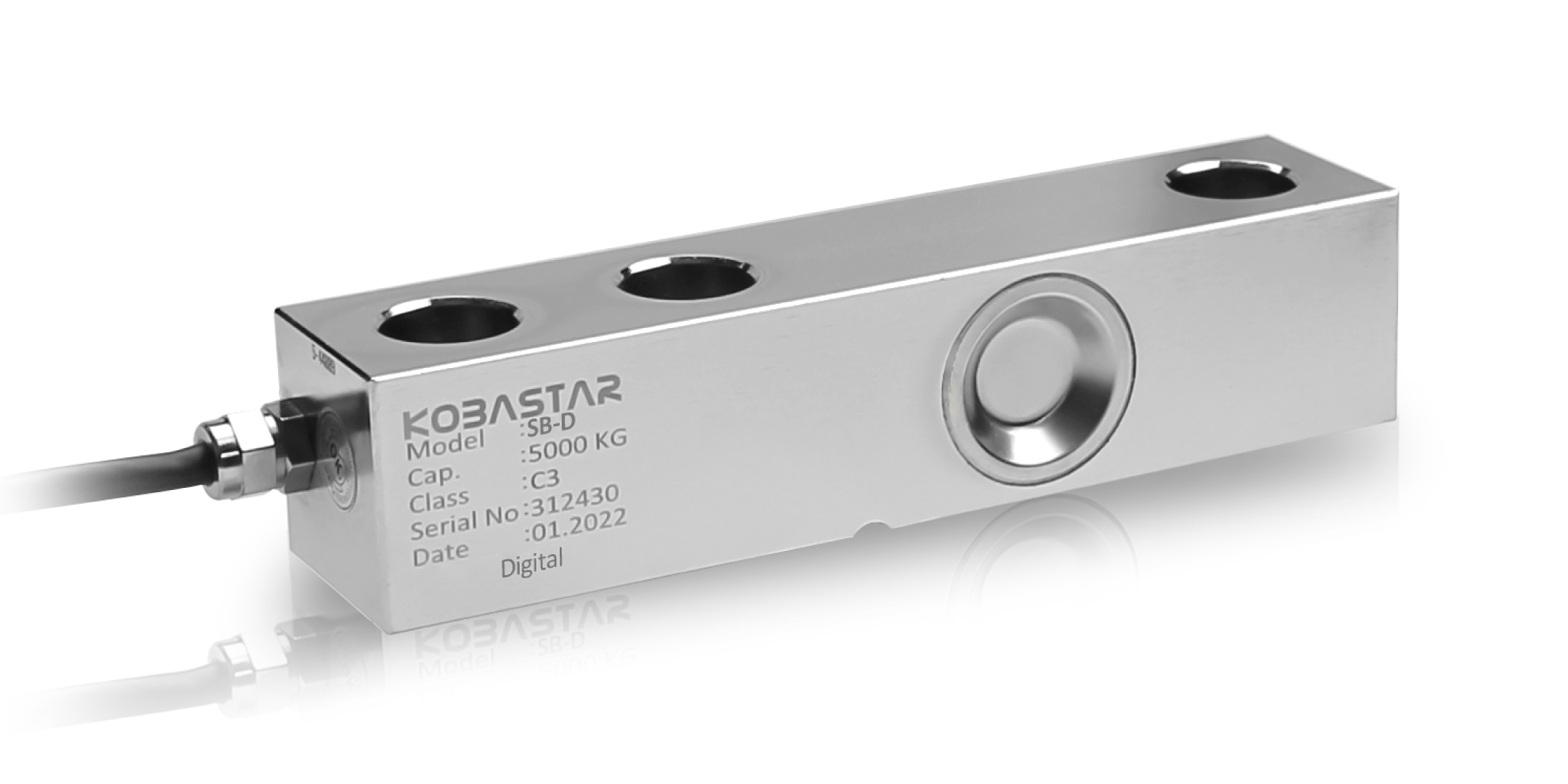


What Is a Digital Load Cell?
A digital load cell combines the strain-gauge sensing element, precision A/D converter, signal-processing electronics and digital communication interface in one industrial sensor. Instead of carrying a very low-level analogue signal over the full cable length, conversion takes place close to the strain gauges. The indicator, PLC or automation system therefore receives processed digital measurement data that is easier to manage over long cable routes and in electrically demanding environments.
Digital load cells can transmit more than weight alone. Depending on the model and protocol, the system can monitor address, zero, tare, filter, unit, capacity, operating status and diagnostic information. This capability simplifies commissioning and service in multi-cell platforms, tanks, silos, packaging lines, filling systems and checkweighers.
How Does a Digital Load Cell Work?
When a load is applied, the elastic measuring section of the load cell undergoes a very small deformation. Bonded strain gauges convert this deformation into a change in electrical resistance. In an analogue load cell, the resulting mV/V signal travels to an external weighing indicator for amplification, filtering and conversion. In a digital load cell, the internal converter digitises and filters the signal before transmitting the measurement through an industrial communication interface.
Converting the signal near the sensing element helps maintain stable data over long cable distances, particularly around motors, drives, contactors and power cables. Individual addressing also allows each sensor in a multi-load-cell system to be observed separately.
Analogue and Digital Load Cells Compared
Both technologies measure force through strain gauges, but they differ in the way measurement data is processed and transmitted:
- Signal transmission: analogue systems carry a low-level mV/V signal, while digital systems transmit processed numerical data.
- Diagnostics: individually addressed sensors make it easier to identify an abnormal load cell in a multi-cell installation.
- Corner adjustment: compatible systems can manage individual correction values through software.
- Noise management: digital communication, together with correct cabling, shielding and termination, supports stable operation over longer distances.
- Service efficiency: status and communication data can reduce troubleshooting and recommissioning time.
Digital Communication and Modbus RTU Integration
Modbus RTU is a widely used serial communication protocol in industrial automation. A compatible digital load cell can expose weight, status, zero, tare, unit, filter, capacity, address and baud-rate information through defined registers. A PLC, weighing indicator, HMI or data-acquisition platform can read these registers and incorporate weighing data directly into the production process.
The communication protocol, baud rate, device addresses, cable topology, termination and shielding method should be planned before commissioning. Matching settings across every device is as important to reliable data transfer as correct mechanical installation.
Accuracy, Calibration and Traceability
System accuracy depends on more than the load cell accuracy class. Load introduction, platform rigidity, mounting-surface alignment, cabling, temperature, vibration, side loads and calibration practice all affect the final result. Individual sensor monitoring in a digital system makes it easier to compare corner loads and evaluate the performance of each load cell.
Commissioning should include zero adjustment, capacity configuration, loading-direction checks, communication testing and span calibration with known reference weights. Periodic inspection should monitor zero stability, repeatability, corner differences and communication errors. Applications subject to legal metrology must also follow the relevant approval and verification requirements.
Typical Digital Load Cell Applications
- Platform scales and multi-cell weighing platforms
- Packaging, dosing and bagging machines
- Liquid filling and process weighing systems
- Checkweighers and production-line quality control
- Tank, silo and hopper weighing
- Conveyor and automation-integrated weighing applications
- High-capacity industrial scales and custom machinery
How to Select the Right Digital Load Cell
Nominal capacity is only one part of model selection. Dead load, maximum product load, dynamic impact, safety factor and potential overload must be calculated together. The mechanical format—compression, tension, shear beam, double-ended shear beam or bending beam—must suit the available mounting space and the direction of the applied force.
Accuracy class, minimum measurement range, environmental protection, body material, operating temperature, cable length and communication protocol should also be evaluated. Washdown, humid and outdoor installations may require a higher IP rating and stainless-steel construction. Where chemicals are present, the compatibility of the body, seals and cable with the process environment must be confirmed.
Installation and Commissioning
The load cell should receive force along the axis specified by the manufacturer. Side loads, bending moments and mechanical binding should be minimised. Mounting surfaces must be clean, rigid and parallel, with fasteners tightened to the specified torque. Signal cables should be routed away from power circuits and electromagnetic-noise sources, while shielding and grounding should follow the project standard.
In multi-cell digital systems, each sensor requires a unique address and the communication line must be terminated correctly. Software correction cannot compensate permanently for poor mechanics; load transfer, platform geometry and free movement should always be checked first.
Maintenance and Troubleshooting
Routine maintenance should inspect mechanical connections, cable routes, connectors, moisture or corrosion, and free movement under load. If zero drift, loss of repeatability, cell imbalance or communication interruptions occur, mechanical and electrical checks should be performed together. Address and status data from digital sensors help distinguish between cable, communication, mounting and load-cell faults.
Kobastar Digital Load Cell Solutions
Kobastar offers digital load cells for different capacities and mechanical arrangements. The SBK-D digital bending beam load cell is a compact option for platforms, packaging, liquid filling and checkweighing. The SB-D digital shear beam load cell and DSB-D digital double-ended shear beam load cell support higher-capacity industrial weighing applications.
Capacity, mounting, process conditions and the automation architecture should be evaluated together. Kobastar’s technical team can assist with model selection and integration for new installations and modernisation projects.
TSD Digital Load Cell
TSD Digital Load Cell: The TSD digital load cell transmits measurement data digitally to deliver stable, traceable and reliable results in high-capacity industrial weighing applications.
Engineering Checklist for Digital Load Cell Projects
A digital load cell should be selected as part of a complete weighing architecture. Confirm nominal capacity, dead load, dynamic factor, safe overload, environmental rating, body material and the required communication protocol. In a multi-cell platform, verify that the indicator or PLC supports the number of addressed sensors, register map, baud rate and diagnostic functions required by the process.
During commissioning, record each sensor address, unloaded value, response under a reference load and communication error count. Check bus topology, termination and cable shield according to the manufacturer’s EMC instructions. Software corner correction is useful, but it must not be used to hide a twisted structure, unequal support or a mechanical bypass path.
Digital data does not eliminate mechanical errors
Conversion close to the strain gauges improves signal transmission and diagnostics, yet final accuracy still depends on force introduction, mounting alignment, vibration, temperature and calibration. A stable installation combines correct mechanics, traceable reference loads and documented parameters.
Information to provide when requesting a model
- Total dead load and maximum net product
- Number of supports and expected eccentric loading
- Static, dynamic, impact or dosing duty
- Indoor, outdoor, washdown or corrosive environment
- Required PLC/indicator protocol and cable distance
- Target resolution, repeatability and legal-metrology requirement