


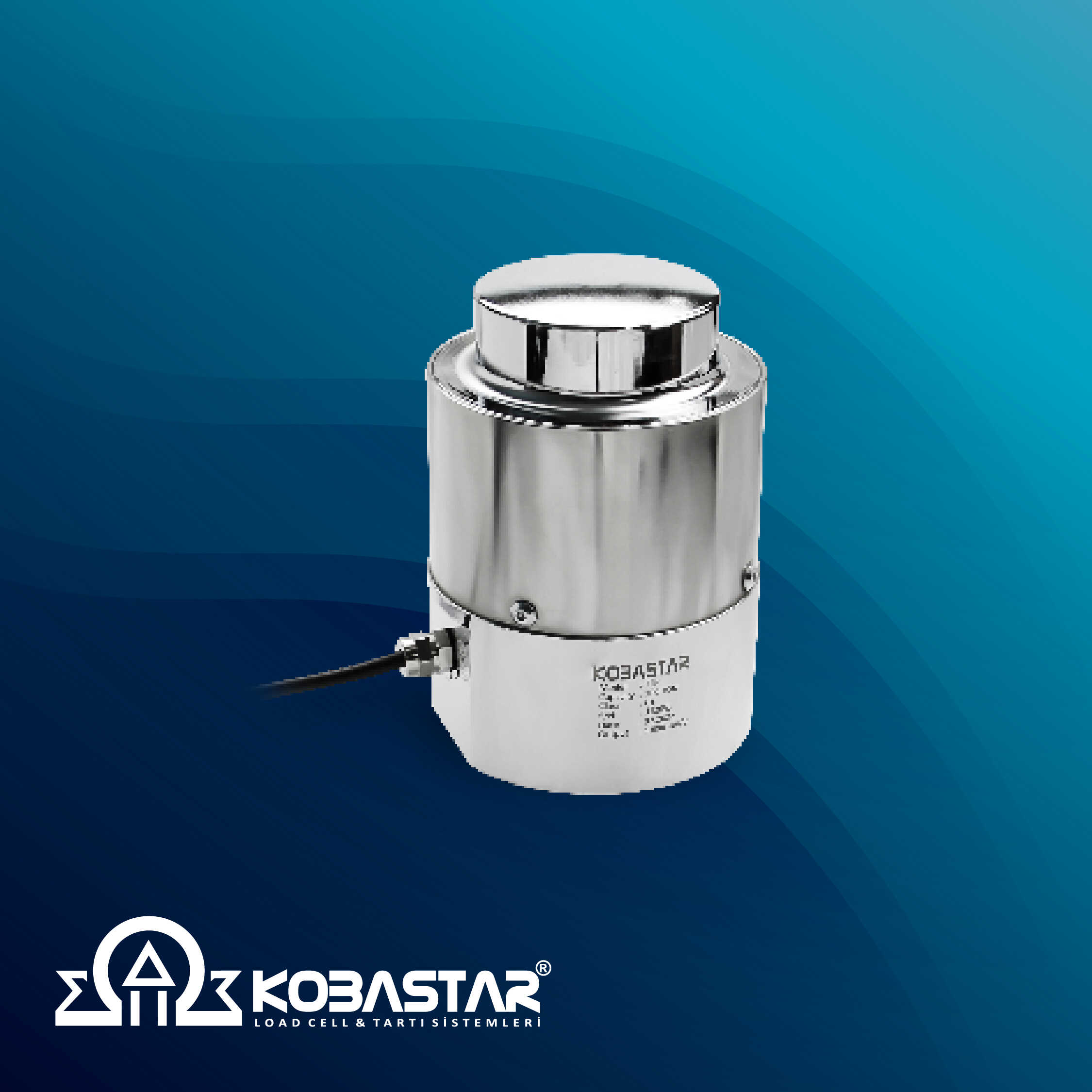
3E400 Axis Force Sensor
- kobastar
- February 27, 2026
- 7:03 pm
Features:
- The 3-axis force load cell measures forces simultaneously on 3 mutually perpendicular axes: and interference between channels.
- Each axis provides a complete bridge output and requires no mathematical manipulation.
- The 3-axis load cell is built to minimize eccentric loading effects and interference between channels.
- This 3-axis load cell is ideal for many industrial and scientific applications such as aerospace, robotics, automotive and medical research (orthopedics and biomechanics).
Application Areas:
- Force application control in robotics
- Automotive crash test
- Industrial test benches
- Grinding force control, etc.

Loadcells can be used in different applications as well as weight measurement. One of these is the measurement of transmissivity. Conductivity refers to how well a substance can conduct electric current. This feature is an important parameter in many industrial applications, thus increasing the importance of accurate measurement.
To measure conductivity with a loadcell, you first need a resistance meter, a pair of wires, a temperature sensor and a voltage source. Conductivity measurement is accomplished by measuring the resistance of a material. For example, to measure the conductivity of a solution, an electric current is applied to the solution and the resistance of the current is measured. This resistance is directly proportional to the conductivity of the solution.
Loadcell is a sensor used to make these measurements. This sensor is used to measure the electrical properties of a material. To make measurements, a Loadcell signal transmitter, a Loadcell measuring device, a pair of wires, a temperature sensor and a voltage source are used.
First of all, the signal transmitter receives the signal from the voltage source and sends it to the Loadcell. The loadcell is placed on the material it measures. The load on the material is measured by the Loadcell and this load is converted into an electrical signal. This signal is received and processed by the measuring device.
Next, the double wire, temperature sensor and voltage source are connected to the solution to be measured. Current is applied and resistance is measured. The measuring device processes the signals received by the Loadcell and calculates the resistance and conductivity values. These values can then be displayed on a screen showing the parameters the user wants to measure.
Measuring conductivity with a loadcell has an important role in many industrial applications. Therefore, ensuring accurate measurement is a critical requirement for manufacturing processes. Choosing the right material and using the right measuring device ensures accurate results.