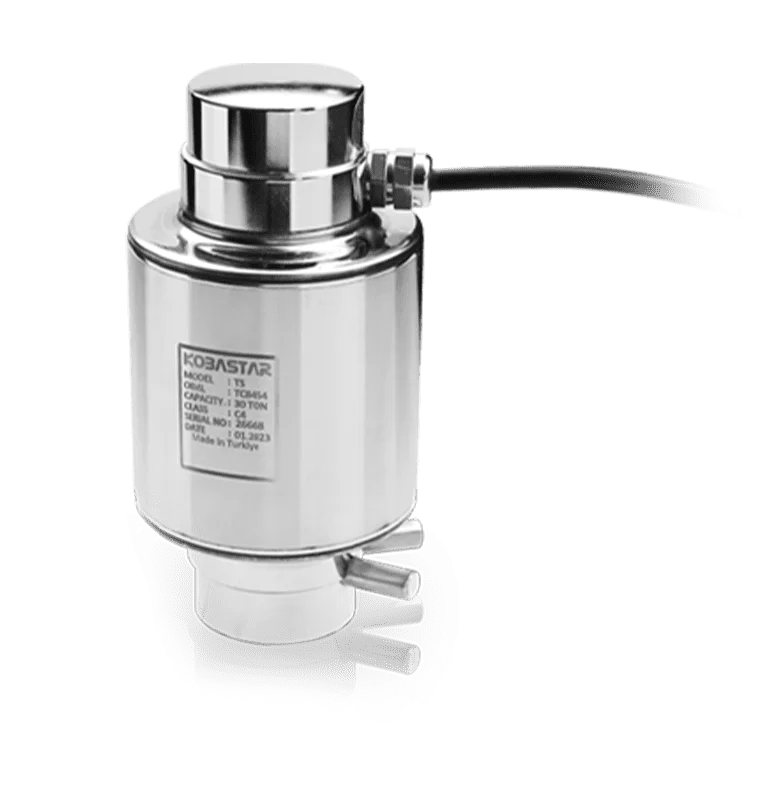
A checkweigher is a device that helps to ensure quality standards by quickly and precisely measuring the weight of products passing through the production line. This system automatically checks whether the weights of packages are within specified limits and rejects out-of-tolerance products. Often used for weighing products in motion, checkweighers improve line efficiency and guarantee compliance with legal regulations. Thus, it minimizes errors in production processes and maximizes customer satisfaction.
Package Weight Check
Legislation requires that the average value of pack weights must comply with the value stated on the label and that there must be no excessive deviations from this value. No pack can be significantly more or less than the weight indicated on the label.
To comply with these requirements and increase the efficiency of the packaging process, CheckWeigher operators and supervisors need a good understanding of the principles of moving weighing and statistical package weight control. This knowledge and practices can significantly reduce the problem of overweight or underweight packages for companies.
A Guide to Production Statistics
The filling of a product on the production line depends on random events such as wind movements, voltage fluctuations, humidity, product density. For this reason, it is often not possible for the fillings to be perfectly even. This results in slightly different weights for each pack. These differences occur in accordance with statistical laws such as the normal distribution and standard deviation.
Normal Distribution and Standard Deviation
The normal distribution refers to the concentration of the weights of a group of products around the mean. The mean (the average is called “µ”) is calculated as the sum of all values in a data set divided by the number of values. The standard deviation (“σ”) shows how common the data are around the mean.

68% of a product group lies between one standard deviation below and above the mean value. For a more precise analysis, a 95% bell curve can be drawn with a range of two standard deviations. For example, with a new filling machine, if the average weight is 13 kg and the standard deviation is 1 kg, 95% of packages will be between 11 and 15 kg.
Accuracy and Repeatability
The accuracy of a Checkweigher describes how close the measured weight is to the actual weight of a test product. A second important factor is repeatability, which refers to how consistent the weight values are when the same product is weighed repeatedly. A lower standard deviation means better repeatability and a more accurate CheckWeigher.

An ideal checkweigher is a device with a minimum difference between the actual weight of the products and the measured values. These products are appropriately classified on a normal distribution bell curve.
Checkweigher Accuracy
The accuracy of a Checkweigher can be calculated by weighing the same product repeatedly. The standard deviation obtained from this process indicates the accuracy of the instrument. An ideal CheckWeigher should be able to accurately determine whether the product is within the weight zone.
However, large regional differences can be difficult to determine due to environmental factors and technical limitations in machine design. Identifying narrower weight zones ensures that products are within an acceptable range.
Package weight control is a critical process both to comply with regulatory standards and to improve product quality. Using a checkweigher helps companies reduce costs and deliver more consistent products while optimizing the packaging process.
The Foundation of Accuracy
The most critical elements that make up the accuracy of a checkweighing system are the concepts of linearity and repeatability. The success of the CheckWeigher checkweigher also depends heavily on these two parameters.
Linearity
Linearity is an indication of how close the CheckWeigher gets to the actual weight value each time it weighs the same test load. The difference between the actual weight and the displayed weight is defined as the “error” and a smaller error indicates a more linear system.
The average of the differences between the actual weight of a package and the value read by the device gives the average error. It should be noted here that the fabricated linearity of the load cell and the linearity parameters captured by the weight control system during operation may not always coincide exactly.
Repeatability
Repeatability refers to how close the results are when a particular product is weighed repeatedly. This is usually calculated using the standard deviation method. A low standard deviation means that fluctuations in weighing results are small and therefore CheckWeigher offers high repeatability (or precision).
Example Graph Analysis
The following hypothetical scenario is based on weighing a specific product on 4 different weight checkers, 5 times each. As a reference, the target weight value taken in a static environment on a calibrated balance was used.

- The First Weight Checkweigher: Provides neither linearity nor repeatability; values show a wide spread around the target.
- Second Checkweigher: Linear but not repeatable, with large differences between the results of each individual weighing, even though the average of the measurements falls close to the target.
- Third CheckWeigher: Gives repeatable results but is not linear. All weight measurements agree with each other but are far from the actual target value.
- Fourth CheckWeigher: Both linear and repeatable. All measurements are centered around the target value and are very close to each other.
This example emphasizes how linearity and repeatability parameters should be considered together when choosing the right CheckWeigher. A successful CheckWeigher not only produces results close to the true value but also maintains consistency over repeated measurements.