


3E400 Axis Force Sensor
- kobastar
- February 27, 2026
- 7:03 pm
Features:
- The 3-axis force load cell measures forces simultaneously on 3 mutually perpendicular axes: and interference between channels.
- Each axis provides a complete bridge output and requires no mathematical manipulation.
- The 3-axis load cell is built to minimize eccentric loading effects and interference between channels.
- This 3-axis load cell is ideal for many industrial and scientific applications such as aerospace, robotics, automotive and medical research (orthopedics and biomechanics).
Application Areas:
- Force application control in robotics
- Automotive crash test
- Industrial test benches
- Grinding force control, etc.

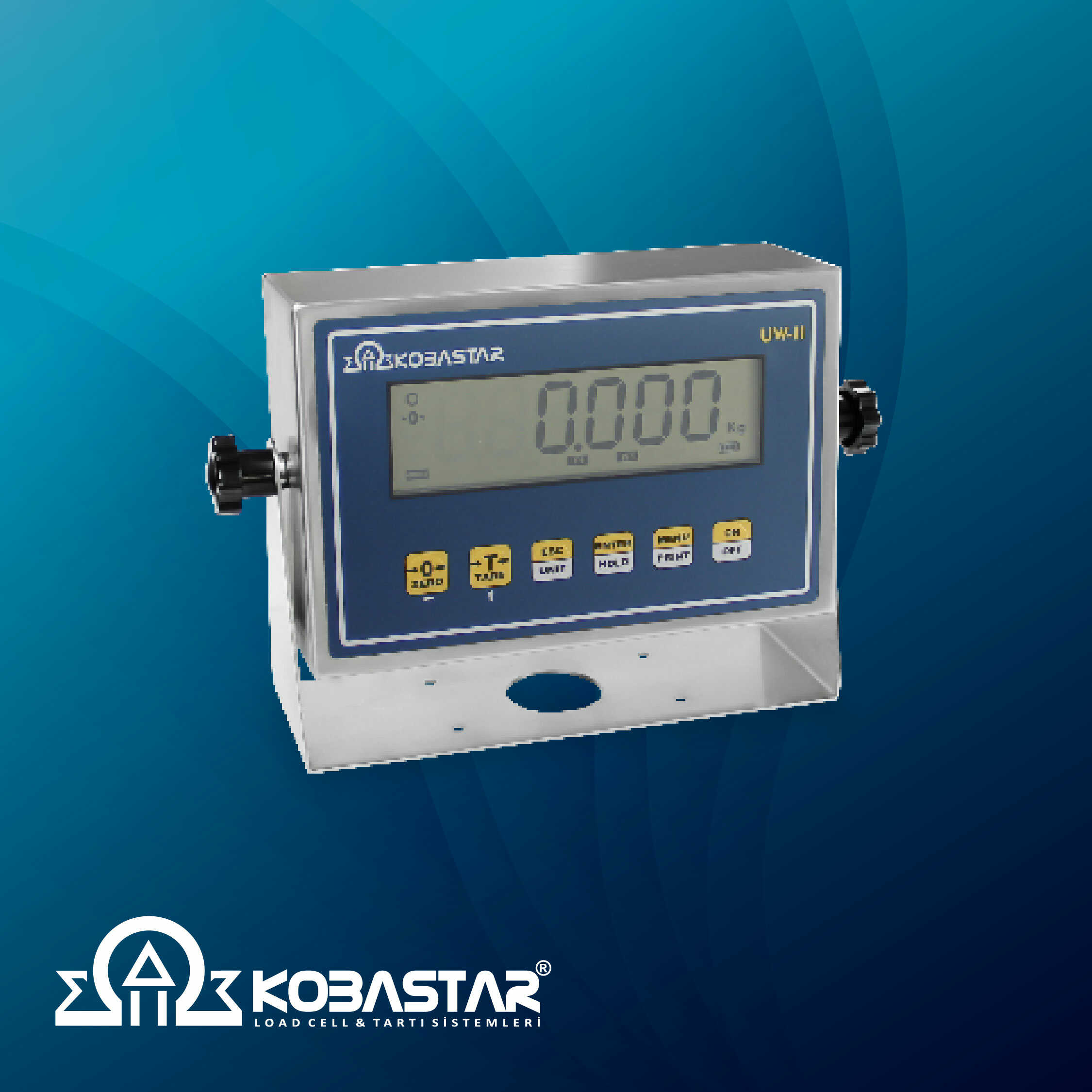
Weighing indicators used in the weighing industry work with load cells designed for various purposes. Load cells are transducers used to measure the weight of an object.
Weighing indicators are devices often used in industrial, commercial, or laboratory settings. These receive signals from load cells, process these signals, and ultimately display the weight or mass of the object.
Load cells come in various types and can differ depending on their intended use. However, weighing indicators generally work with the two most commonly used types of load cells:
Strain Gauge Load Cells: These types of load cells are small sensors made of metal alloys or other durable materials. When a load is applied, the resistance in these sensors changes and this change is converted into an electrical signal to measure the weight of the object. Weighing indicators receive this electrical signal and use it to calculate the measurement.
Capacitive Load Cells: This type of load cells usually work by measuring the changing capacitance of capacitors. When load is applied, the distance or area between the capacitors changes, resulting in a change in the capacitance of the capacitors. This change is converted into an electrical signal and processed by the weighing indicator.
Weighing indicators can be compatible with different load cells depending on the intended use and requirements. For example, a weighing indicator used in an industrial warehouse may be compatible with resistive load cells that require high endurance, while it may also be compatible with more sensitive capacitive load cells for precise laboratory weighing.
In general, weighing indicators usually work with resistive or capacitive load cells. Both types of load cells provide high accuracy and reliability and can be used in a variety of industrial and commercial applications.